INVITED SPEAKERS & PANELISTS
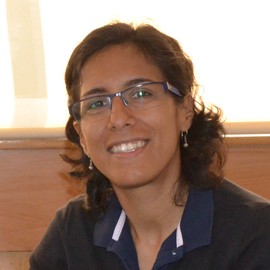
Helena Gómez Adorno is a professor at the Research Institute in Applied Mathematics and Systems (IIMAS), UNAM. She earned her Ph.D. in Computer Science from the Center for Computing Research in Mexico. Her research focuses on natural language processing (NLP) and information retrieval, with work spanning clinical NLP, semantic similarity, authorship analysis, and opinion mining on social media. She is a member of the Mexican National System of Researchers (SNII) of the Mexican Research Department. Dr. Gómez Adorno has published extensively in conferences and journals in NLP, has mentored numerous students, and has served as program chair, area chair, and reviewer for various national and international NLP conferences. She is an active board member of the ACL.
Title: Beyond Spanish: Cultural Grounding for Latin American NLP
Abstract: Large language models can work in many languages, but that does not mean they really understand the cultures behind those languages. This talk, will discuss why NLP needs to move beyond simply supporting Spanish and pay closer attention to the cultural and social diversity of Latin America. We will focus on how local knowledge, community-based data, retrieval methods, and better evaluation can help us understand where current models fail and how we can make them more useful for specific communities.
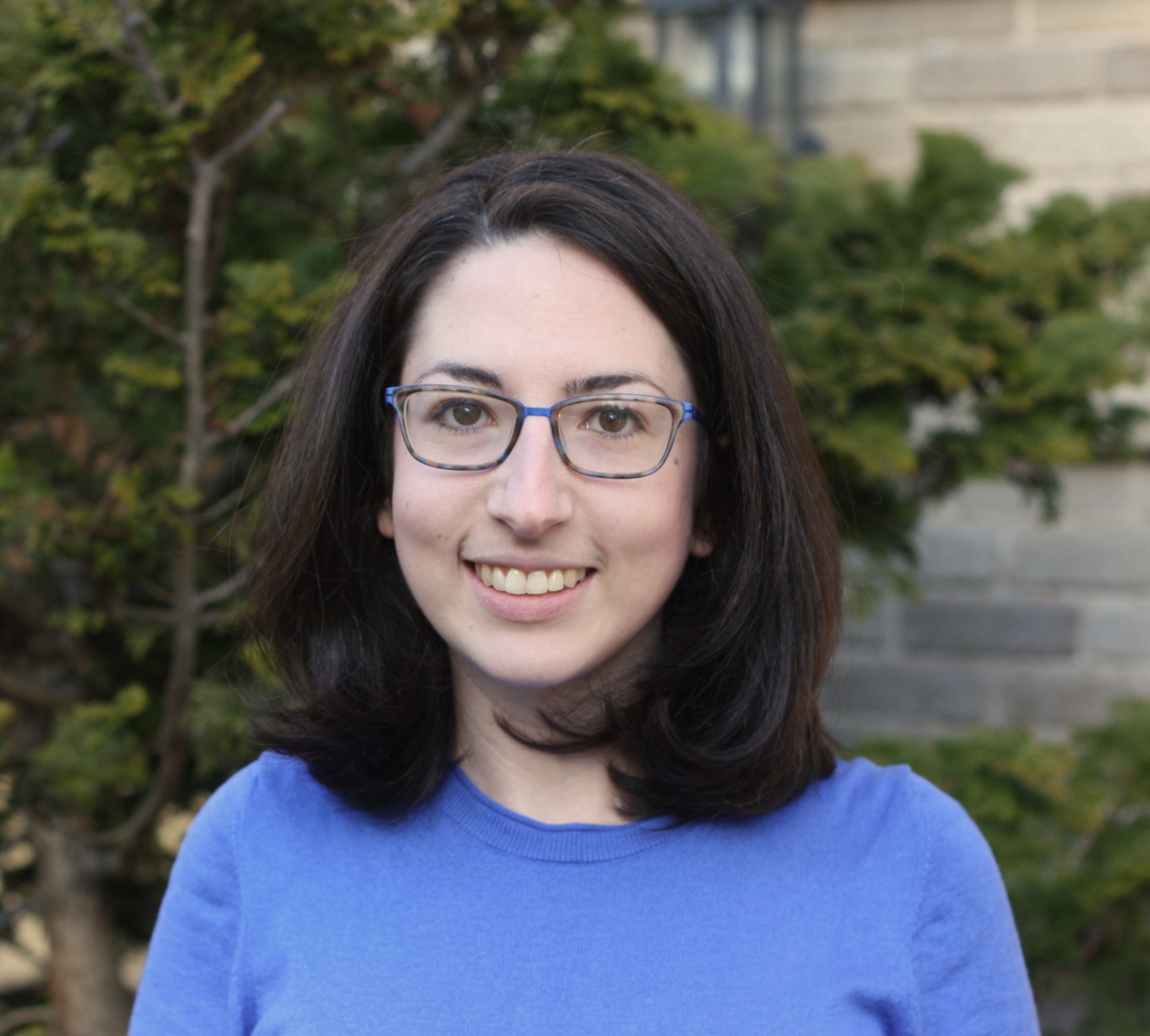
Rachel Rudinger is an Associate Professor of Computer Science at the University of Maryland. Her research interests lie in the areas of natural language understanding, commonsense reasoning, computational semantics/pragmatics, and issues of sociocultural fairness in NLP systems. She is a recipient of the National Science Foundation CAREER Award and holds a Ph.D. in Computer Science from Johns Hopkins University.
Title: Like Nailing Jello to the Wall? Challenges for Evaluating Common Sense and Cultural Consensus
Abstract: Common-sense reasoning, or the ability to draw inferences about everyday situations, inherently involves reasoning under uncertainty. Because notions of what constitutes a "correct" inference in common-sense reasoning can be difficult to pin down, this presents challenges for the construction of evaluation datasets. In particular, cross-cultural differences and cognitive biases are important factors of variation for how annotators judge the plausibility of situational outcomes. In this talk, I will discuss some of my lab's research efforts to study and address these challenges for evaluation.
ORGANIZING COMMITTEE
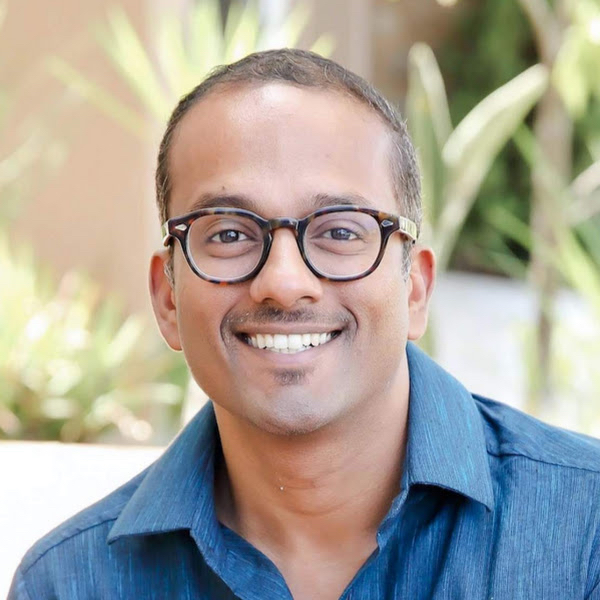
Vinodkumar Prabhakaran
Staff Research Scientist
Google Research
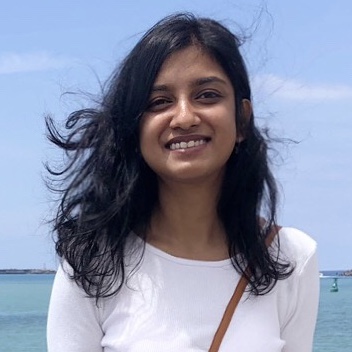
Sunipa Dev
Senior Research Scientist
Google Research
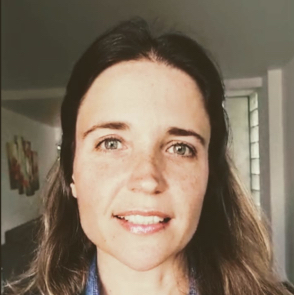
Luciana Benotti
Associate Professor
Universidad Nacional de Córdoba
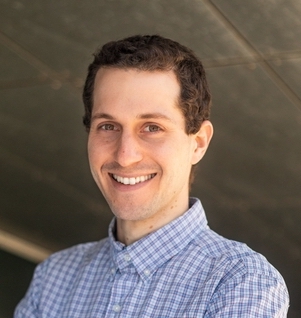
Daniel Hershcovich
Assistant Professor
University of Copenhagen
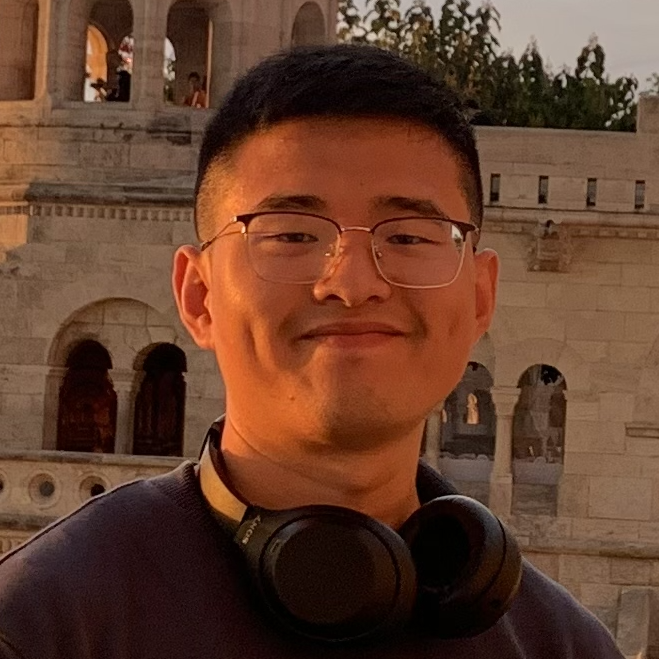
Yong Cao
Postdoc Researcher
University of Tübingen

Li Zhou
Postdoc Researcher
The Chinese University of Hong Kong, Shenzhen
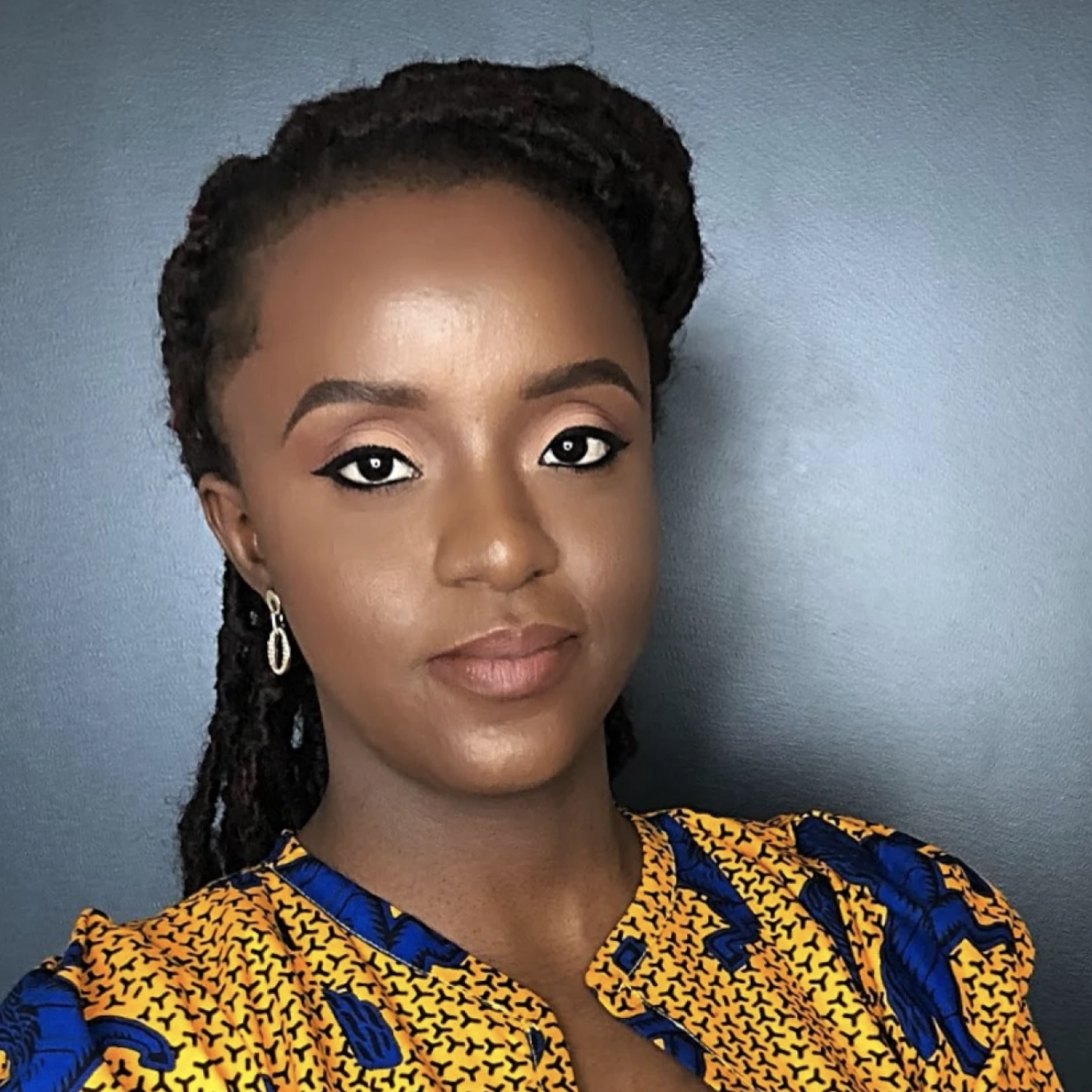
Ife Adebara
PhD Student
University of British Columbia

Bolei Ma
PhD Student
LMU Munich
OUR SPONSORS

Gold Sponsors
Sponsorship Tiers
Platinum ($3,000)
This is a great way to position your company or organisation as a thought leader in the field of
cross-cultural considerations in NLP,
signalling to researchers, civil society, competitors and buyers your commitment to furthering social-oriented
research that benefits all of us.
Your company name will feature in our recordings, on the website and in the Proceedings. We will explicitly
acknowledge and thank you for your support of
C3NLP@ACL.
- Large Logo on Website (with hyperlink)
- Large Logo in Proceedings
- Invitation to attend the workshop
- Company name in recording description
- Acknowledgement at the beginning and end of the workshop
Gold ($2,000)
This is our mid-tiered package and will still give you great exposure to our attendees. Unlike Platinum, the company logos will be sized slightly smaller. But you will still get access to the community and be able to demonstrate your commitment to the topic.
- Large Logo on Website (with hyperlink)
- Medium Logo in Proceedings
- Invitation to attend the workshop
- Company name in recording description
- Acknowledgement at the beginning and end of the workshop
Silver ($1,000)
This is our smallest package and is an excellent way to first explore the C3NLP community and learn more about our exciting programme of research. With all packages, you are able to meet with the Workshop organisers and find out more about how to position your company within C3NLP, which can be particularly useful for first-time sponsors.
- Medium Logo on Website (with hyperlink)
- Medium Logo in Proceedings
- Company name in recording description
- Acknowledgement at the beginning and end of the workshop
ACCEPTED PAPERS
Archival
Annotation as Cultural Interpretation: Rethinking Data Labeling in NLP
Somatic in the East, Psychological in the West?: A Clinically-Grounded Evaluation of Cross-Cultural Depression Symptoms in LLMs
GCCLA: Graph-Conditioned Cross-Lingual Adaptation of Large Language Models Under Extreme Data Scarcity (A Case Study in Tigrigna)
LLM-Adapted Colombian Spanish Lexicography: Proficiency Control, Hallucination, and Cultural Distortion
Soft Prompts for Adapting LLMs to Cultural Commonsense Knowledge
The Mirage of Diversity: Unmasking the Cultural Vocabulary Ceiling in LLMs
The American Palimpsest: Quantifying South Asian English Dialect Erasure in LLMs
Toward Culturally Grounded Natural Language Processing
TabletCraft: Bridging a 4,000-Year Cultural Gap with Bidirectional Akkadian NMT and Cuneiform Rendering
Lost in Translation? How Language Shapes Responsibility Attribution in Large Language Models
Ontology-oriented lexico-semantic modeling and neural classification of Chinese chéngyǔ: A culture-aware NLP
Sorry, Can't Help You: How Large Language Models Judge Failures to Help Across Languages
Does Reasoning Kill the Joke? Long-Context Humor Understanding in Hindi
One Style Fits All? Cultural Values Embedded in Conversational AI via a People-Pleasing Lens
Beyond Monolithic Culture: Evaluating Understandability of Online Text Across Cultural Dimensions
Non-Archival
Culture by Design : A Sociotechnical Framework for Culturally Grounded AI for Mental Health
Adaptive Data Collection for Latin-American Community-sourced Evaluation of Stereotypes (LACES)
Indigenous Inheritances: Integrating Traditional Ecological Knowledge into Wildfire Mitigation
Modeling Cultural and Subcultural Variation in Code-Switched Discourse with Topic Annotation
The Language of Bargaining: Linguistic Effects in LLM Negotiations
Cultural Markers and Narrative Homogeneity in AI-Generated Stories
Let’s Talk, Not Type: An Oral-First Multi-Agent Architecture for Guaraní
Culture Affordance Atlas: Reconciling Object Diversity Through Functional Mapping
Cross-Cultural Value Awareness in Large Vision-Language Models
VideoNorms: Benchmarking Cultural Norm Understanding of Video Language Models
Steering LLMs for Culturally Localized Generation
Cultural Mirrors, Distorted Reflections: How Language and Name Scripts Shape Ethnic Hierarchies in Western and Chinese LLMs
Beyond 'One Language, One Script': Quantifying Orthographic Bias in Multilingual VLMs with PuMVR
Are Vision Language Models Cross-Cultural Theory of Mind Reasoners?
Already Accepted Track
Reheat Nachos for Dinner? Evaluating AI Support for Cross-Cultural Communication of Neologisms.
SAFARI: A Community-Engaged Approach and Dataset of Stereotype Resources in the Sub-Saharan African Context
Carefully Considering Culture: Analyzing LLM Alignment in Single- and Multi-Cultural Settings using Cultural Consensus Theory
Previous Workshops
Check out the proceedings from previous years!
Contact and Follow us
Feel free to reach out if you have any questions or suggestions.
Workshop Related
c3nlp.committee@gmail.com
Website Related
yong.cao@uni-tuebingen.de
Follow Us
on Twitter
Follow Us
on Bluesky